Coffee is a fruit, and, like any other fruit, it goes through different stages of…
Tips to Never Go Wrong with Your Coffee Grind Again
Coffee when freshly ground brings an amazing experience. It starts with the aroma that will be exhaled by the environment when grinding the coffee. It continues with the differentiated flavour that will be presented in the cup. However, it is necessary to understand which grind to use for the method chosen to prepare the coffee. The granulometry of the grinding is very important to ensure that your extraction is good. Imagine the following, you have an extremely fine ground coffee, similar to breadcrumbs, to be prepared using the conventional paper filter. Have you ever noticed that the water takes time to pass through the coffee in this case? Will this influence the final result of your drink? Is the grinding granulometry correct?
Importance of Grinding
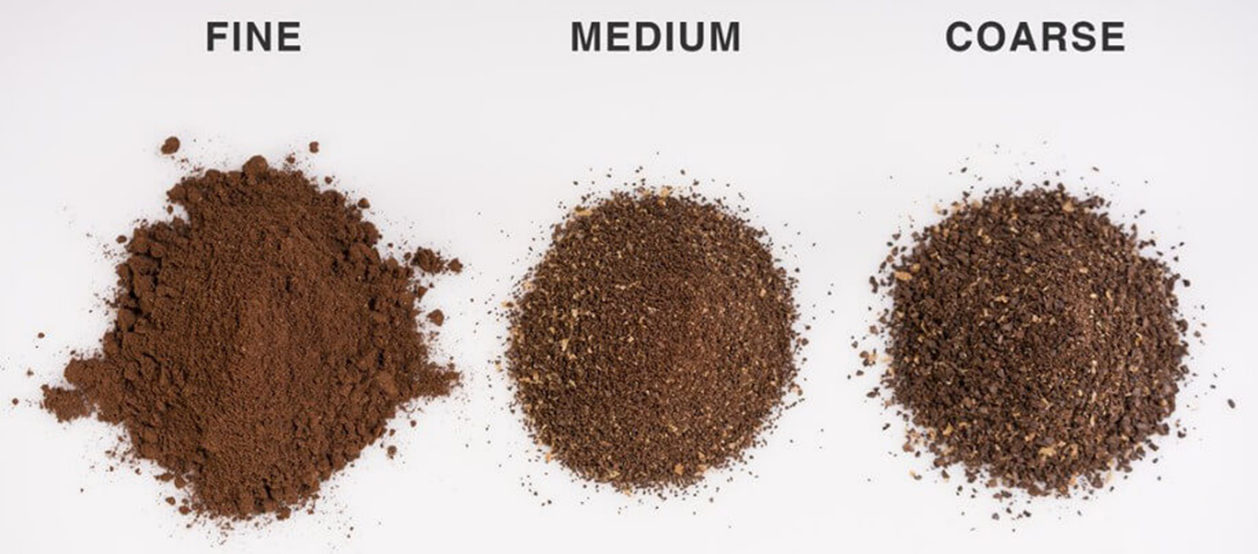
Grinding in the appropriate granulometry for the preparation method used to extract the coffee is of great importance for a good extraction. The size of the ground coffee beans differs for each preparation method that can be used to extract the beverage. The finer the grind, the greater the contact of the coffee particles with the water, as the contact surface of the beans increases. Let’s use brewed coffee as an example, in which it would be more difficult for water to pass through the finely ground coffee powder, as it will find more barriers to pass through. As a result, the extraction will be greater due to the contact time of the water with the extremely fine particles. Continuing with the strained method as an example. Assume you are using a medium grind to extract, the medium grind will allow water to pass more easily between the coffee particles. The extraction therefore tends to be more balanced. If we keep the same strained method as an example, but change the grind to a coarse grind, the coffee tends to be under-extracted. In other words, the coarse coffee particles will have less contact with the water, which will flow too quickly, resulting in under-extraction of the coffee. The tendency, in this case, is for the coffee to become thin. Therefore, the correct granulometry is extremely important for each preparation method.
Fine Grind
It is used to prepare coffee using espresso machines. In professional machines, the pressure used to pass the water through the ground coffee is high. So, the water will pass quickly through the coffee grounds. Therefore, the grind needs to be fine to increase the contact of the coffee particles with the water and to obtain a good extraction of the coffee.
Medium Grind
Generally, the medium grind is used to prepare coffee using filtered methods (paper strainer, cloth, Chemex) and also in the Italian Coffee Maker and Pressca. In filtered methods, water needs to pass through in a constant stream to extract what the ground coffee has to offer. If it’s too thin, the water will over-extract the coffee and this can cause unwanted intense bitterness in your drink.
Coarse Grind
Coarse grind is generally used for methods where the coffee is in contact with water longer, for example, to prepare coffee in the French press. Larger coffee particles need more contact time with water to extract the most they have to offer.